
Aluminium is the most popular material for window and door joinery in New Zealand and has been used here since the late 1960s. Aluminium is strong, lightweight, corrosion-resistant and low maintenance, which is why it is so popular. It is, however, a good conductor, meaning heat can transfer easily through aluminium.
In order to improve the thermal efficiency while retaining the benefits of aluminium, Thermally Broken Aluminium joinery has been developed. But what exactly does ‘Thermally Broken’ mean? In this article, we will answer that question and expand on why Thermally Broken Aluminium is an ideal product for use in New Zealand.
What Is a Thermal Break?
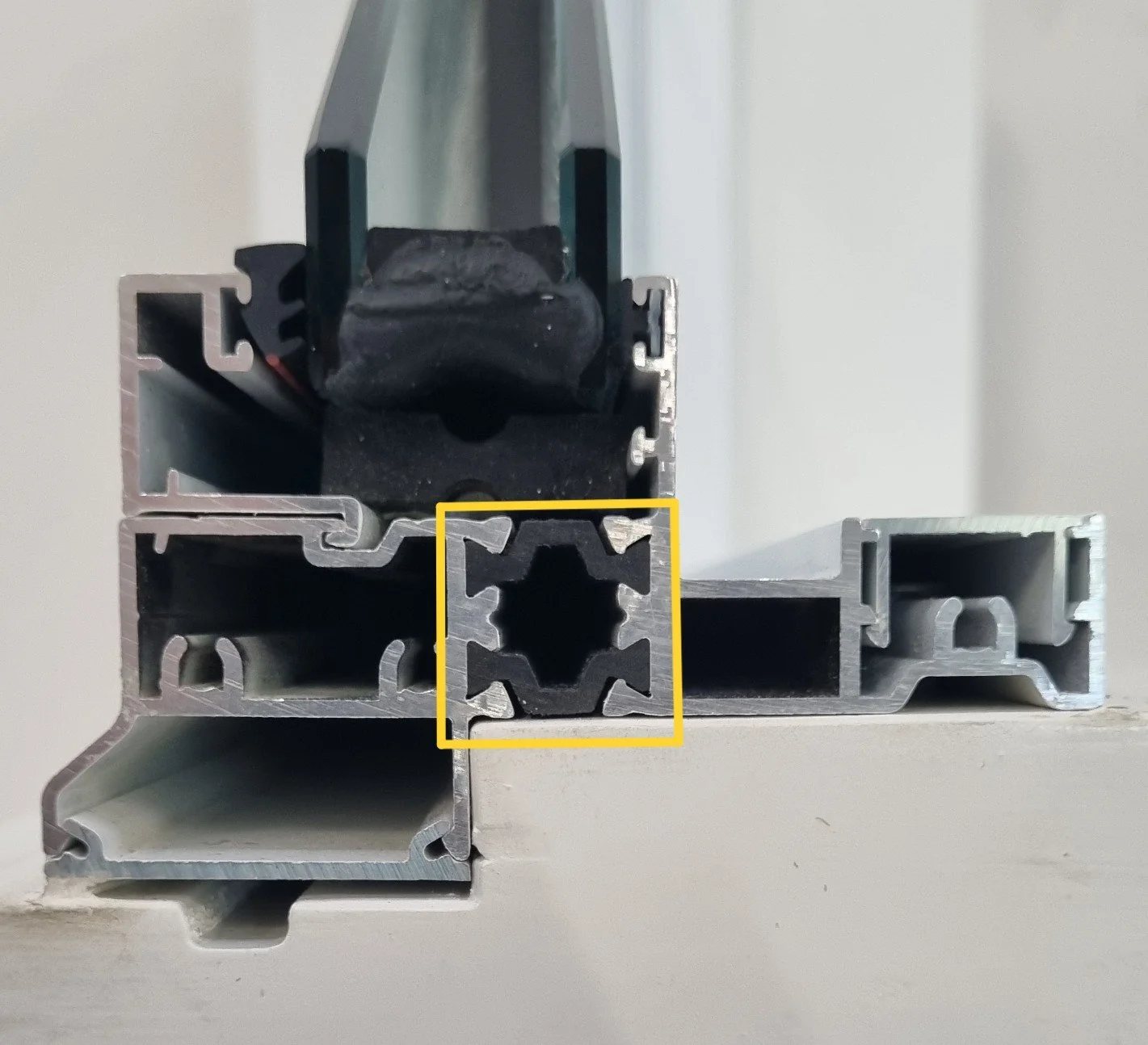
Think of it as insulation that is built into an aluminium frame. The purpose of the thermal break is to avoid having a continuous path of aluminium connecting inside and outside. Adding the thermal break essentially splits the frame into 3 sections:
Exterior aluminium section
Insulating barrier such as reinforced polyamide
Interior aluminium section
The plastic section of the frame is called a thermal break, as it “breaks” the path that heat would normally travel through the metal.
The image below shows a cross section of thermally broken aluminium joinery, with the thermal break shown inside the yellow box.
Types of thermal break
It is important to note that there are different kinds of thermal breaks.
Pour and Debridge Thermal Break
This method involves aluminium joinery being extruded (manufactured) as a single piece with a hollow space in the middle. This hollow space gets filled with plastic that then hardens, forming the thermal break. The aluminium section above and below the thermal break are cut away, leaving the plastic section connecting the inside of the frame with the outside.
Following this process, the thermally broken aluminium window and door profiles are used to fabricate frames that can then be glazed and installed.
Polyamide Strip Thermal Break
This method involves two separate aluminium profiles, external and internal, being extruded. These profiles are then joined together by a hollow polyamide strip (like what is shown in the picture above) using a method called extrusion zipping.
At Eversure, the frames within our reFRAME Full services exclusively utilise the Polyamide Strip thermal break method. We’ve elected to use this type of frame as it provides excellent thermal efficiency while retaining strength.
How Does It Work?
It works by breaking up the path of metal between inside and outside. Aluminium is a good conductor, and with conventional aluminium joinery, cold external tempretures cause the entire frame to become cold, which in turn cools rooms.
With thermally broken aluminium, the inserted thermal barrier, has much lower thermal conductivity and acts as insulation within the joinery, slowing down the transfer of heat through a frame. When it’s cold outside, the external section of the frame will get cold, but the internal section is insulated and therefore doesn’t get so cold.
Why Is Thermally Broken Aluminium Used?
1. Improved Energy Efficiency
Having good quality, energy efficient windows and doors plays a huge part in the overall energy efficiency of a home. For many homes, around 50% of the total heat loss will come via the windows and doors.
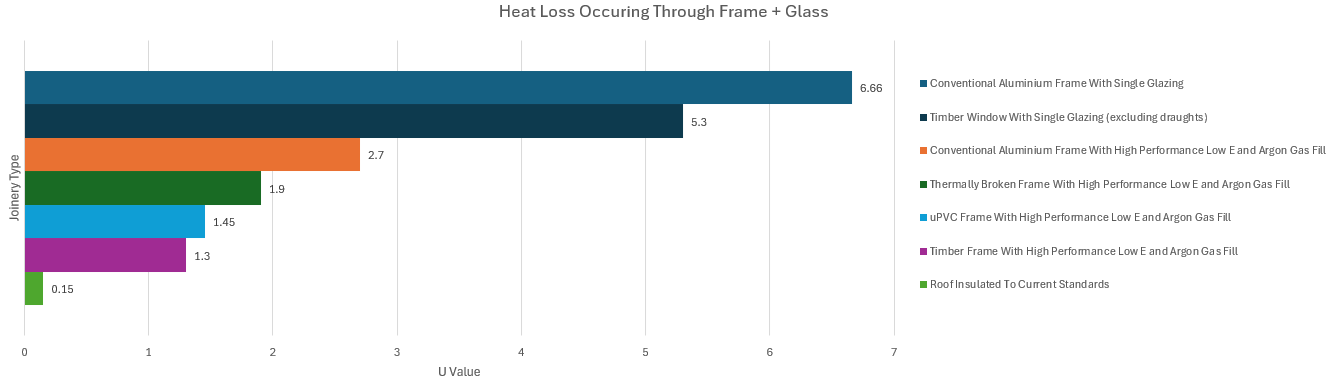
When paired with High Performance Low-E Double Glazing such as SureTemp LE, thermally broken window and door frames achieve excellent overall U-values (heat loss rates). The result of this is a home that is warmer in winter, cooler in summer and less reliant on heaters or air conditioning to create a comfortable home.
The table below shows the U values of different window systems. U Values measure the rate of energy transfer in watts per square metre per kelvin (W/(m²K)). Basically, the lower the number, the better the insulation.
Please note, these U values are indicative and will vary depending on glass quality, frame quality and proportion of glass to frame.
2. Condensation Control
When air cools down and reaches the dew point, condensation forms. With conventional aluminium joinery, the internal aluminium surfaces can become very cold, causing the air that comes in contact with it to cool to the dew point and form condensation.
Thermally broken frames:
Stay warmer on the inside
Reduce the likelihood condensation forming
Lower the risk of mould and frame damage
For more information about how to control condensation, you can read our in-depth article about condensation.
3. Comfort
Homeowners often notice discomfort when sitting near standard aluminium windows in winter due to cold air coming off the windows.
Thermally broken systems:
Reduce cold radiation
Improve perceived indoor comfort
Maintain more consistent temperatures near glazing
4. Retaining Aluminium’s Structural and Aesthetic Benefits
Thermally broken systems still offer everything people value about aluminium:
Slim sightlines
Many options for configuring window and door designs
Low maintenance
Powder-coated durability
Suitability for coastal environments
You get the structural and aesthetic advantages of aluminium — without the major thermal weakness.
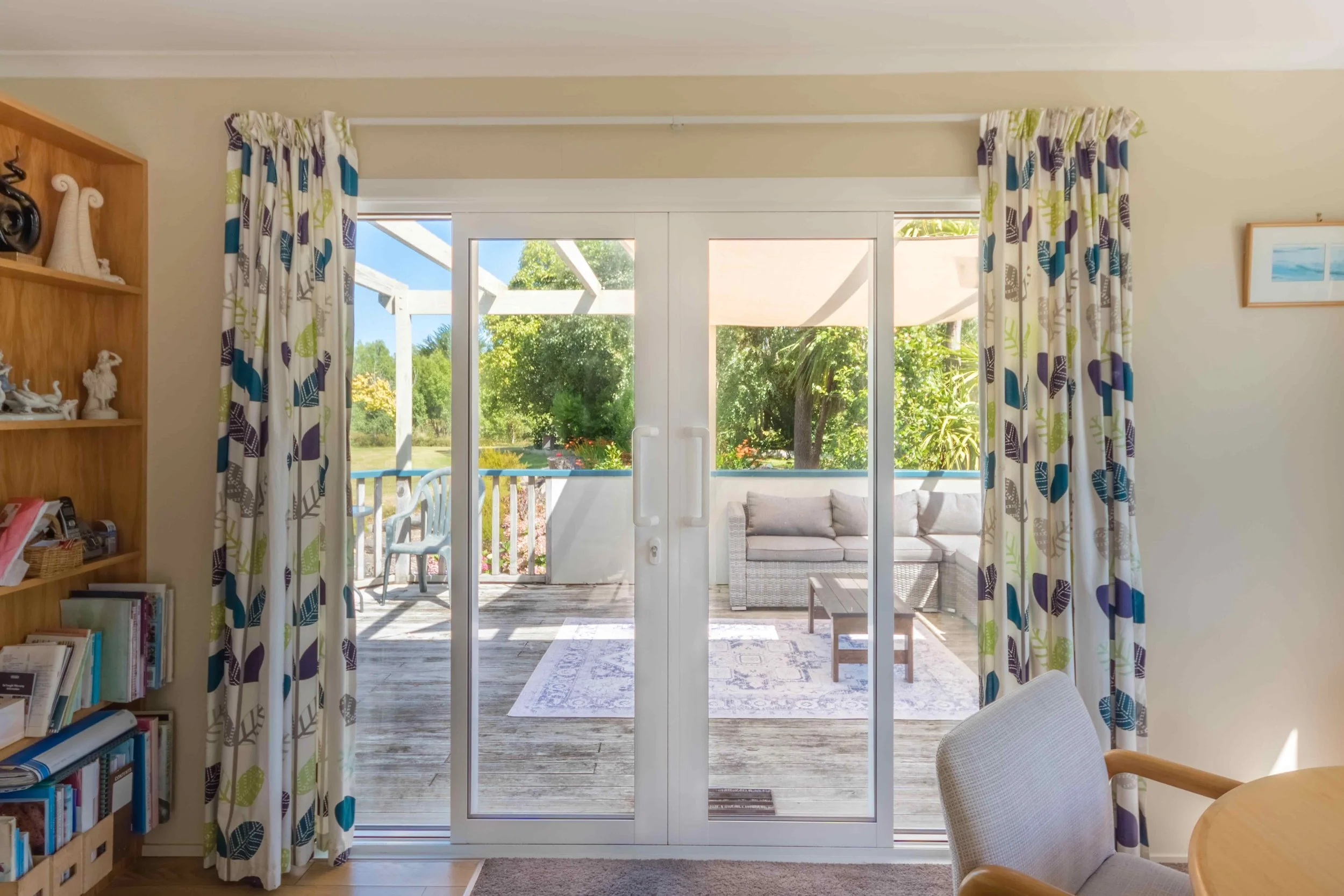
Thermally Broken Aluminium Bi-Parting Sliding Door
How Does Thermally Broken Aluminium Compare with Timber and uPVC?
When it comes to thermal efficiency of a frame material, Timber is the absolute best, followed closely by uPVC and Thermally Broken Aluminium, however, the difference in performance between them is relatively small and they all sit within the same ‘high performance’ category.
Timber joinery naturally insulates well because wood is a poor heat conductor, but it requires more ongoing maintenance and can be draughty, which reduces efficiency. Eversure can retrofit existing timber joinery with the reFIT Timber service. This includes fitting new latching hardware and draught sealing options to get the windows sealing well.
uPVC joinery also has low thermal conductivity; however, the expected service life of uPVC is around half that of aluminium. Due to the inferior service life, larger environmental impact and limitations around colour and design, Eversure has elected to use Thermally Broken Aluminium instead of uPVC for our reFRAME Services.
Conclusion
Thermally Broken Aluminium is Aluminium Joinery with built-in insulation. It’s very well suited for use in New Zealand due to its efficiency, durability and versatility. For these reasons, it is the most popular option for new builds and is used more and more frequently to replace old windows in existing homes.